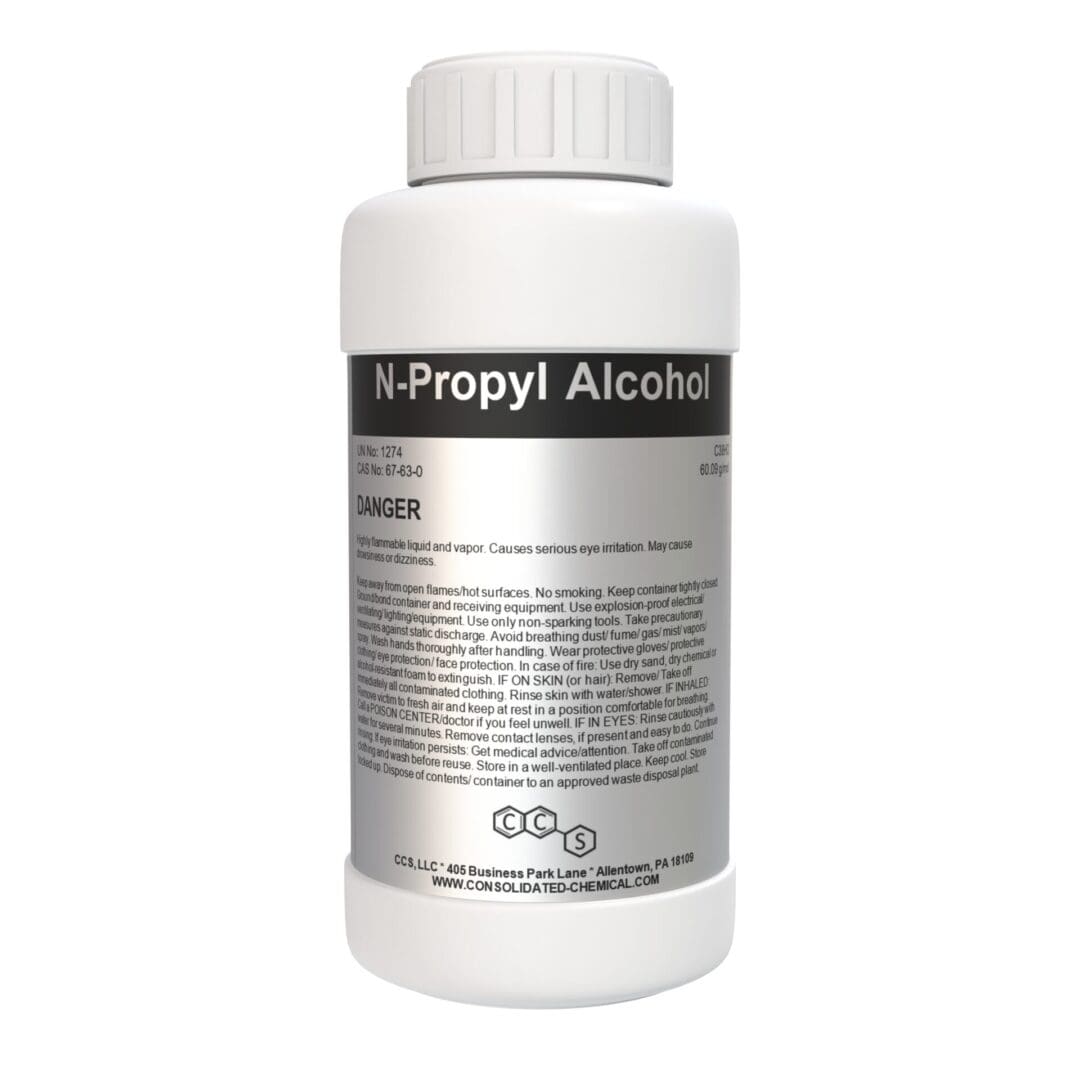
Description Our N-Propyl Alcohol (1-Propanol) is a high-purity, fast-evaporating solvent widely used in cleaning, coatings, and chemical industries. Its excellent solvency and quick-drying properties make it an essential ingredient in industrial and laboratory processes. From cleaning delicate surfaces to serving as a chemical intermediate, N-Propyl Alcohol ensures reliable performance across diverse applications. Applications of N-Propyl Alcohol – High-Purity Industrial and Laboratory Grade Industrial Cleaning Degreaser: Effective for removing oils, greases, and residues from machinery, tools, and equipment. Solvent in Cleaning Solutions: Used in industrial and household cleaning agents for its fast evaporation and excellent solvency. Chemical Synthesis Intermediate: Acts as a precursor or solvent in the synthesis of chemicals, pharmaceuticals, and specialty compounds. Coatings and Inks Solvent for Paints and Coatings: Improves flow and drying characteristics in paints, varnishes, and coatings. Printing Inks: Enhances the viscosity and drying time of printing inks for various applications. Laboratory Use Analytical Solvent: Commonly used in sample preparation, cleaning lab equipment, and analytical processes. Personal Care and Cosmetics Ingredient in Antiseptics and Disinfectants: Used in formulations for hand sanitizers, cleaning wipes, and medical-grade disinfectants. Cosmetic Solvent: Found in lotions, perfumes, and other personal care products for its solvency and quick drying. Electronics Industry Cleaning Agent: Used for cleaning delicate electronic components, circuit boards, and other sensitive equipment. Adhesives and Sealants Solvent: Enhances drying and adhesive properties in formulations for glues and sealants. Energy Sector Additive in Fuel Blends: Occasionally used in fuel formulations and biofuel research. General Industrial Applications Process Solvent: A reliable solvent for various industrial processes, including extraction and purification. Storage Instructions Temperature Control: Store in a cool, dry, and well-ventilated area at temperatures below 25°C (77°F) to prevent evaporation and degradation. Avoid Heat and Ignition Sources: Keep away from open flames, sparks, and hot surfaces, as the product is highly flammable. Sealed Containers: Ensure containers are tightly closed to prevent vapor loss and contamination. Incompatibilities: Store away from strong oxidizing agents, acids, and reactive chemicals. Handling Instructions Personal Protective Equipment (PPE): Wear chemical-resistant gloves, safety goggles, and a lab coat to protect against skin and eye contact. Use a respirator if handling in poorly ventilated areas. Ventilation: Handle in a well-ventilated area or under a fume hood to minimize vapor exposure. Safe Transfer: Use appropriate tools and containers for transfer to prevent spills and vapor release. Ground containers to avoid static discharge. Spill Management: For small spills: Absorb with inert materials such as sand or spill pads. Dispose of according to local regulations. For large spills: Contain and collect for proper disposal. Avoid releasing into drains or waterways. Hygiene Practices: Wash hands thoroughly after handling. Avoid eating, drinking, or smoking in the handling area. Fire and Explosion Precautions Flammability: Highly flammable liquid and vapor. Keep away from ignition sources. Extinguishing Media: Use foam, CO₂, dry chemical, or water fog to extinguish fires. Firefighting: Wear self-contained breathing apparatus (SCBA) and full protective gear. Precautions During Use Avoid inhalation of vapors or direct contact with skin and eyes. Use non-sparking tools and explosion-proof equipment in areas where vapors may accumulate. Disposal Dispose of unused product, contaminated materials, and packaging in compliance with local, state, and federal regulations. Avoid releasing into drains, soil, or waterways.

 N-Propyl Alcohol – Industrial and Laboratory Grade Solvent